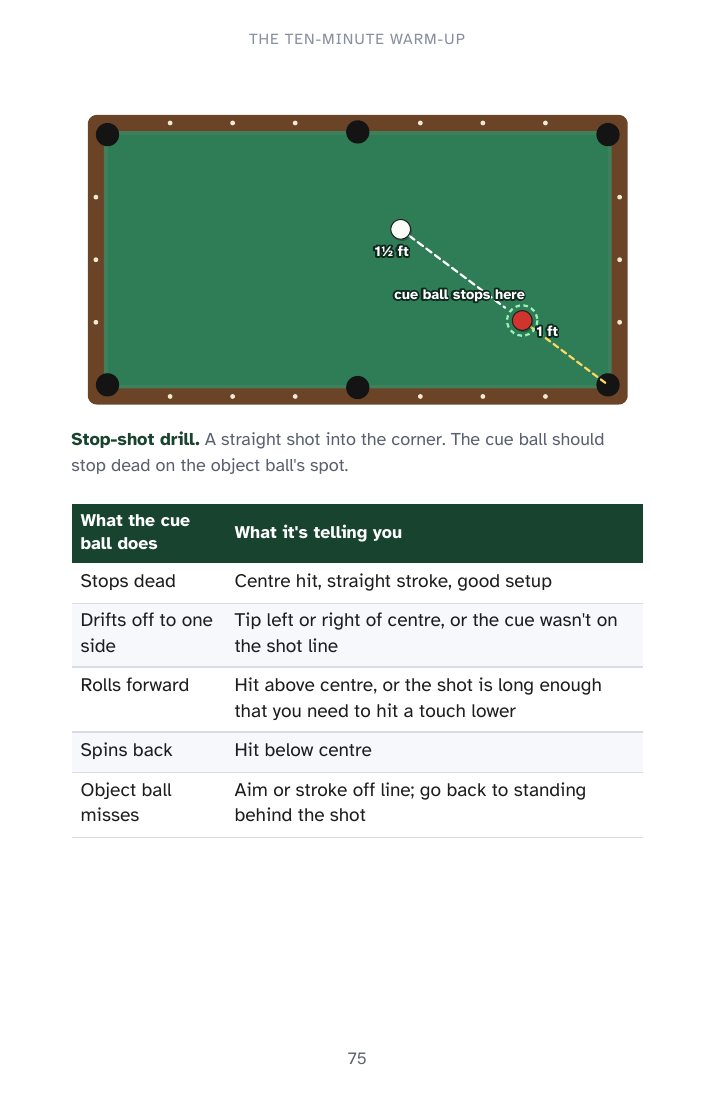
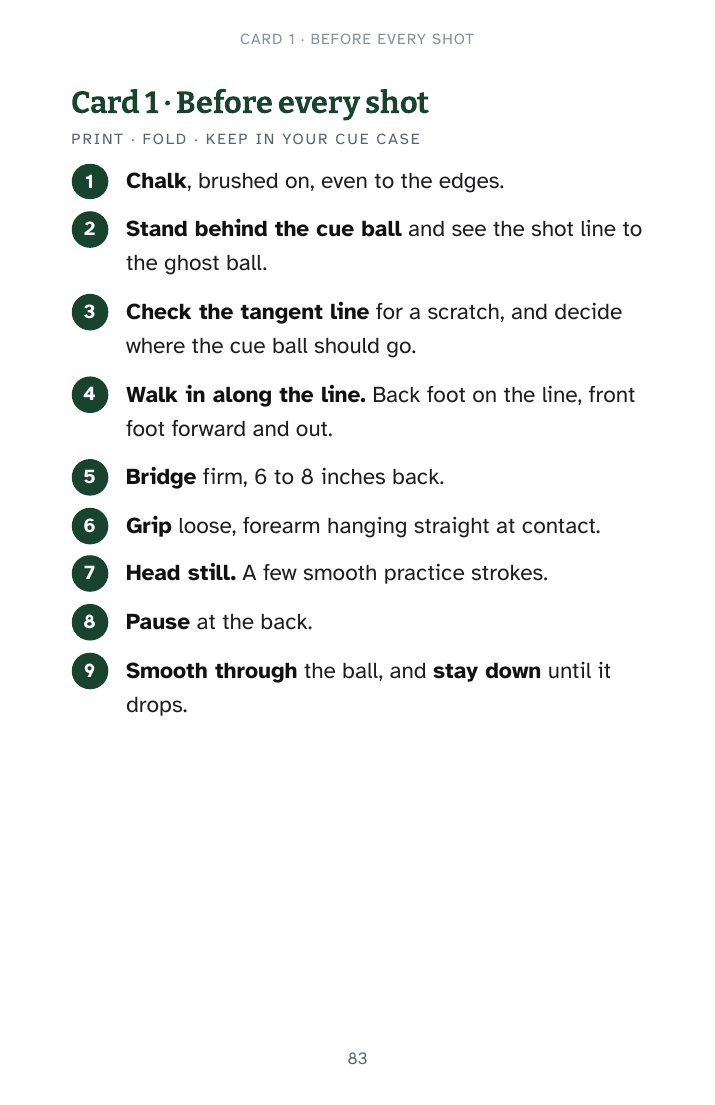
Most easy misses start before the cue ever moves, in the few seconds when you walk up, set your feet and settle over the ball. This handbook shows you how to fix that, then how to aim, control the cue ball and practise, in plain language with clear diagrams.
Get the Handbook · $27
A lot of us picked this game up in a bar or a basement by copying whoever was there, and nobody ever showed us how to set up properly. Then the easy ones start rattling out, and it's tempting to put it down to age. Most of the time, the cause is something small and fixable.
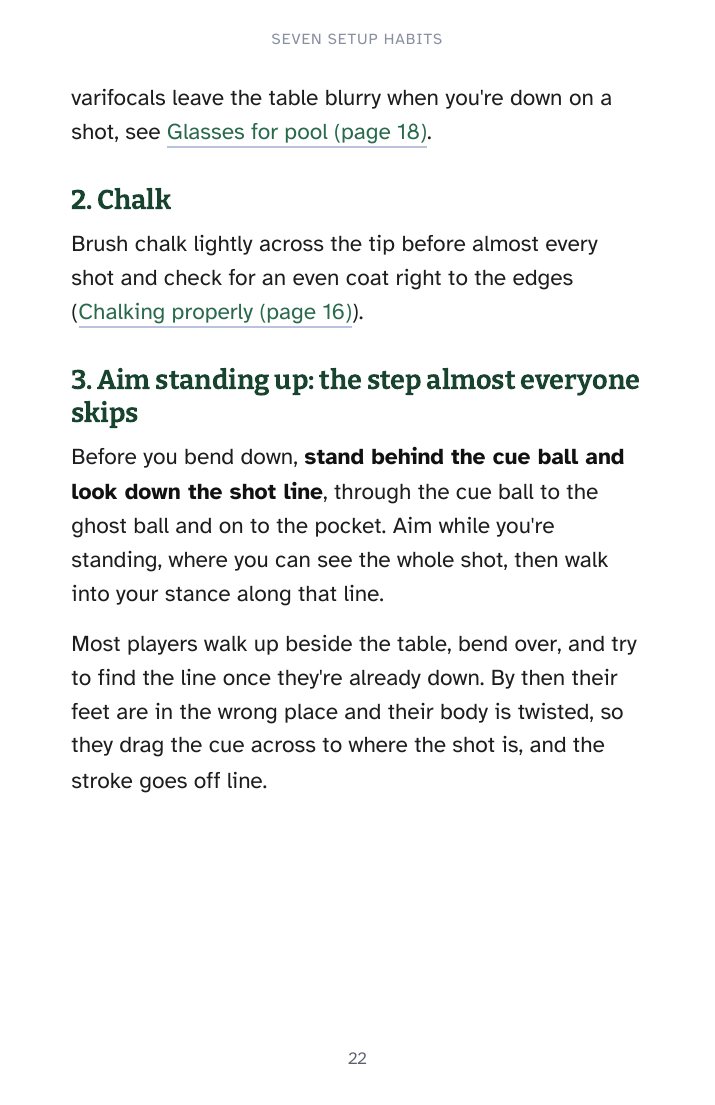
The straight one into the corner you'd make nine times out of ten. A setup that's slightly off, before the stroke even starts, is usually why.
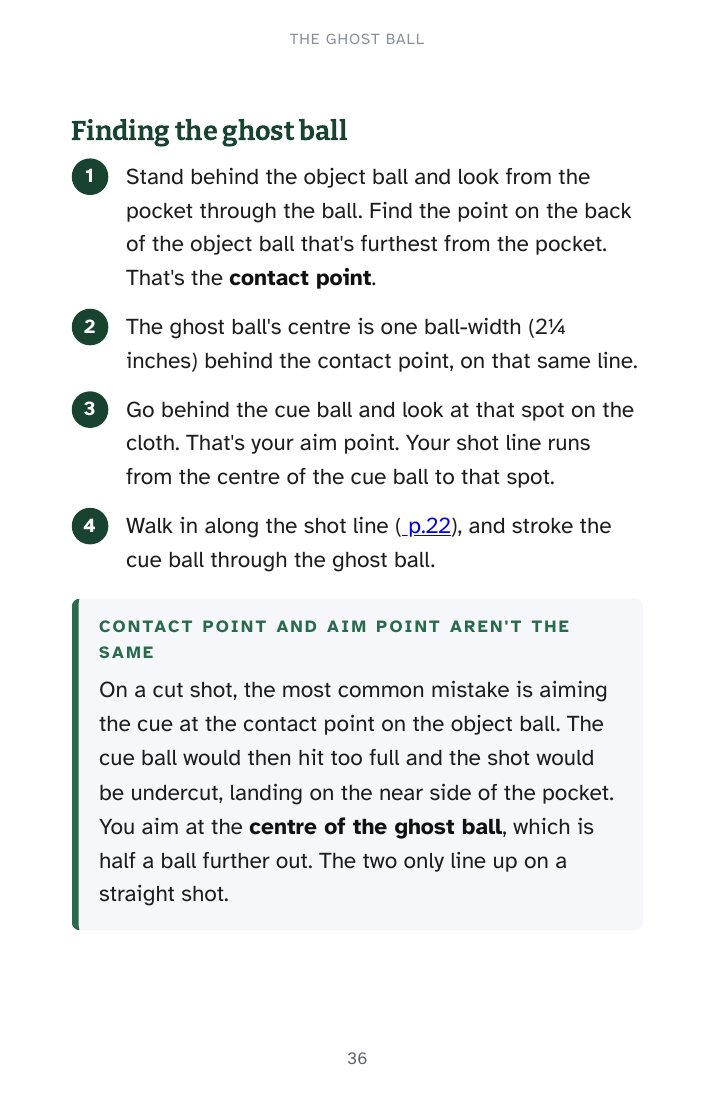
Aiming at the contact point instead of the ghost ball, plus a little friction called throw, sends cut shots short of the pocket.
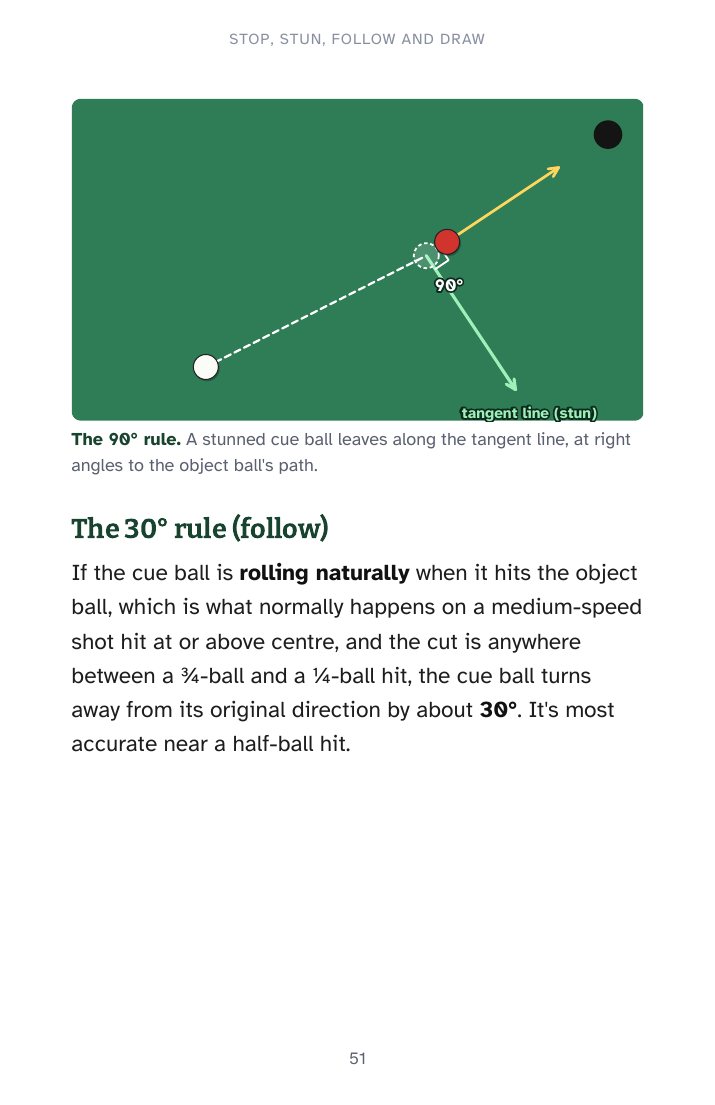
Two simple rules tell you where the cue ball will go. Learn them and you stop scratching and start leaving yourself the next ball.
This book collects the setup, aiming and cue ball lessons from the Pool With Sal videos, with all the detail that doesn't fit into a video, so you can keep it next to the table instead of trying to remember everything.
Good pool rewards a calm, smooth player, and that's something you can be at any age. Most of what fixes your game costs nothing, and a lot of it gets easier with experience rather than harder.
Chalk up, and play it smooth. Sal
Table sizes and diamonds, choosing a cue, looking after your tip, chalking properly, and glasses that are sharp when you're down on a shot.
The seven setup habits, every bridge you'll need including the bridge stick, and a smooth, straight stroke.
The ghost ball, full, ¾, ½ and ¼ ball hits, why cut shots miss and how to allow for it, and banks and kicks with the mirror method.
Where to hit the cue ball, the 90° and 30° rules, follow and draw, speed control, and thinking one ball ahead.
8-ball and 9-ball rules, including where bar and league rules commonly differ, plus safeties, the break and table manners.
A ten-minute warm-up, five simple drills, and how to play comfortably with a stiff back, sore knees or stiff fingers.
Printable cards to keep in your cue case, the key numbers, a glossary and a practice log.
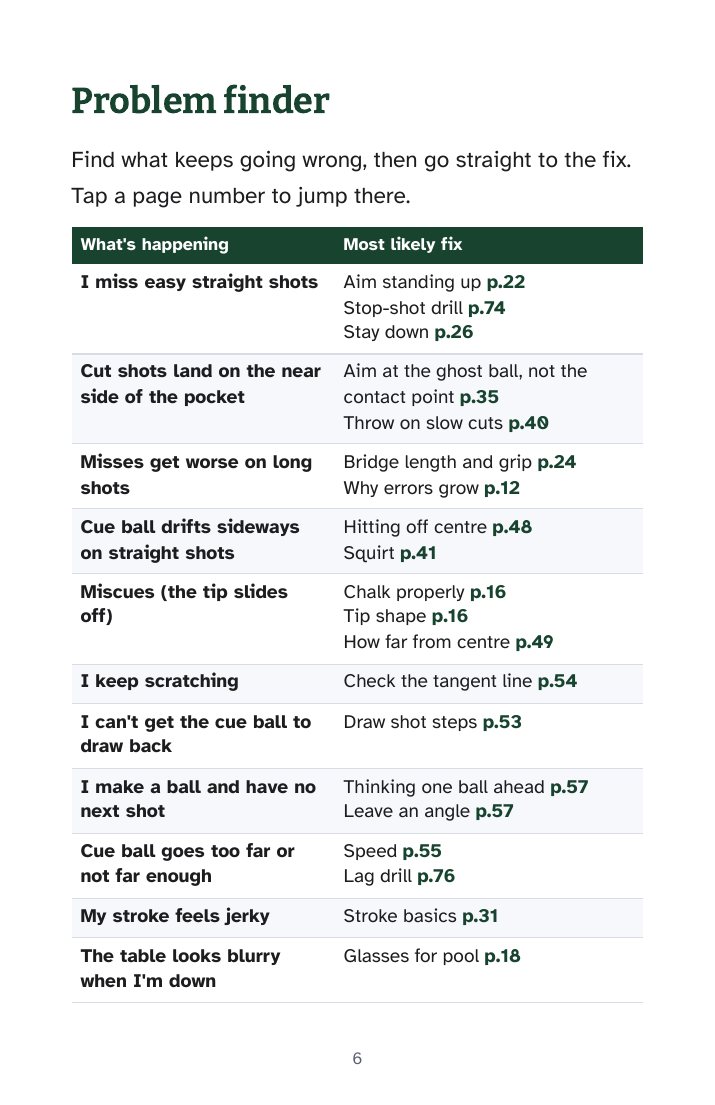
Look up what keeps going wrong, like “I keep scratching”, and tap straight through to the fix.
Every chapter is laid out in short numbered steps, with a diagram wherever one helps. It reads comfortably on a phone or tablet, and prints neatly on ordinary paper.


Straight after you pay, you'll see a download button, and a link is emailed to you as well. The file is a PDF, so it opens on any phone, tablet or computer.
Yes. The book is set in a large, clear typeface designed to be easy to read, with plenty of space and big diagrams. On a phone or tablet you can also zoom in as far as you like.
Yes. It's sized to print neatly on ordinary paper, and the quick-reference cards at the back are made to be printed and kept in your cue case.
Yes. Where it matters, such as foot position, the book tells you how to mirror the instructions.
Yes. Everything works on any size of table, and the book explains how bar tables differ from full-size ones and where bar rules usually differ.
There's a 30-day money-back guarantee. If the handbook isn't for you, reply to your receipt email within 30 days for a full refund.
Checkout is handled by Gumroad, a large and long-established store for digital products. You can pay by card or PayPal, and your payment details never touch this site.
When the handbook is updated with new lessons from the channel, buyers can download the latest version from their Gumroad library at no extra cost.
Start with the setup, practise ten minutes a session, and watch the easy ones start to drop again.
Get the Handbook · $27